
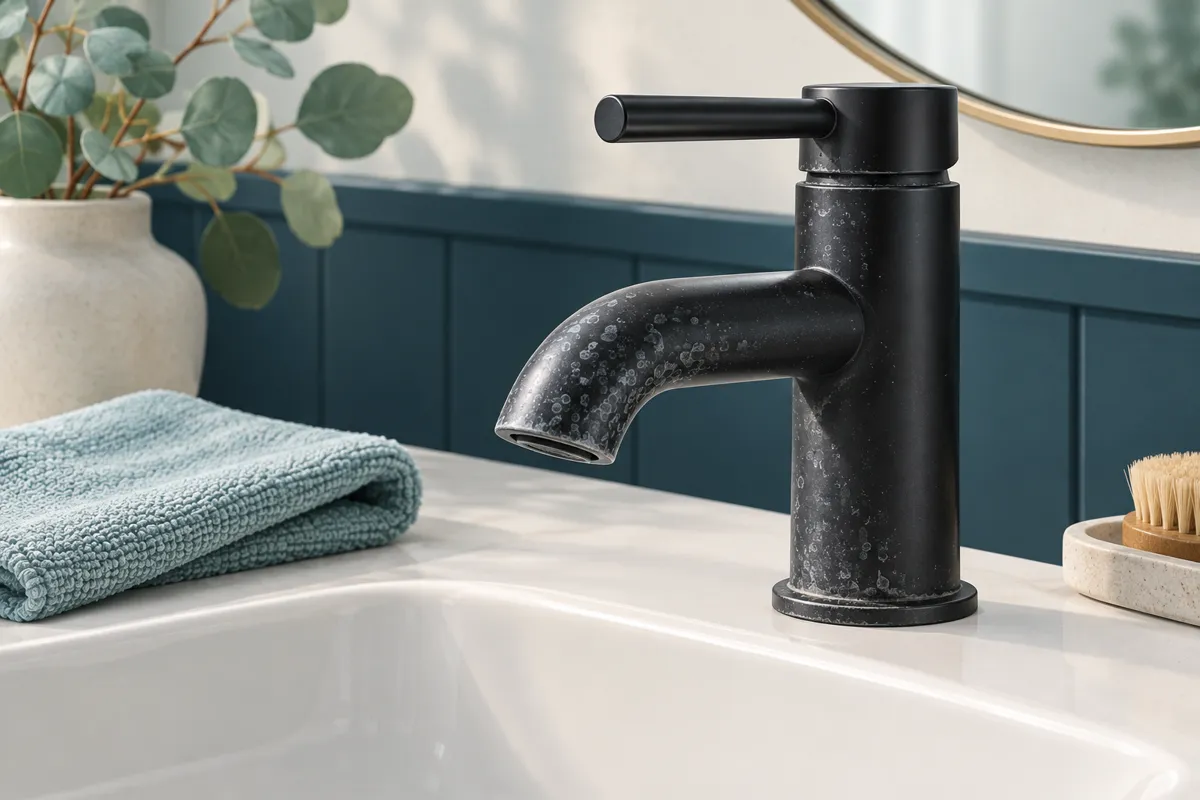
Hard water stains on a faucet should be cleaned with a method approved for that faucet’s finish. Identify the model and coating, start with its routine care instructions, and use a mineral-removal treatment only if it is permitted. Rinse and dry as directed; do not leave an unknown finish soaking in acid.
Chrome, matte black, bronze-colored, and coated finishes can have different care requirements. The color alone is not enough to select a product. This guide helps you remove a deposit without treating the decorative finish as something to scrub away.
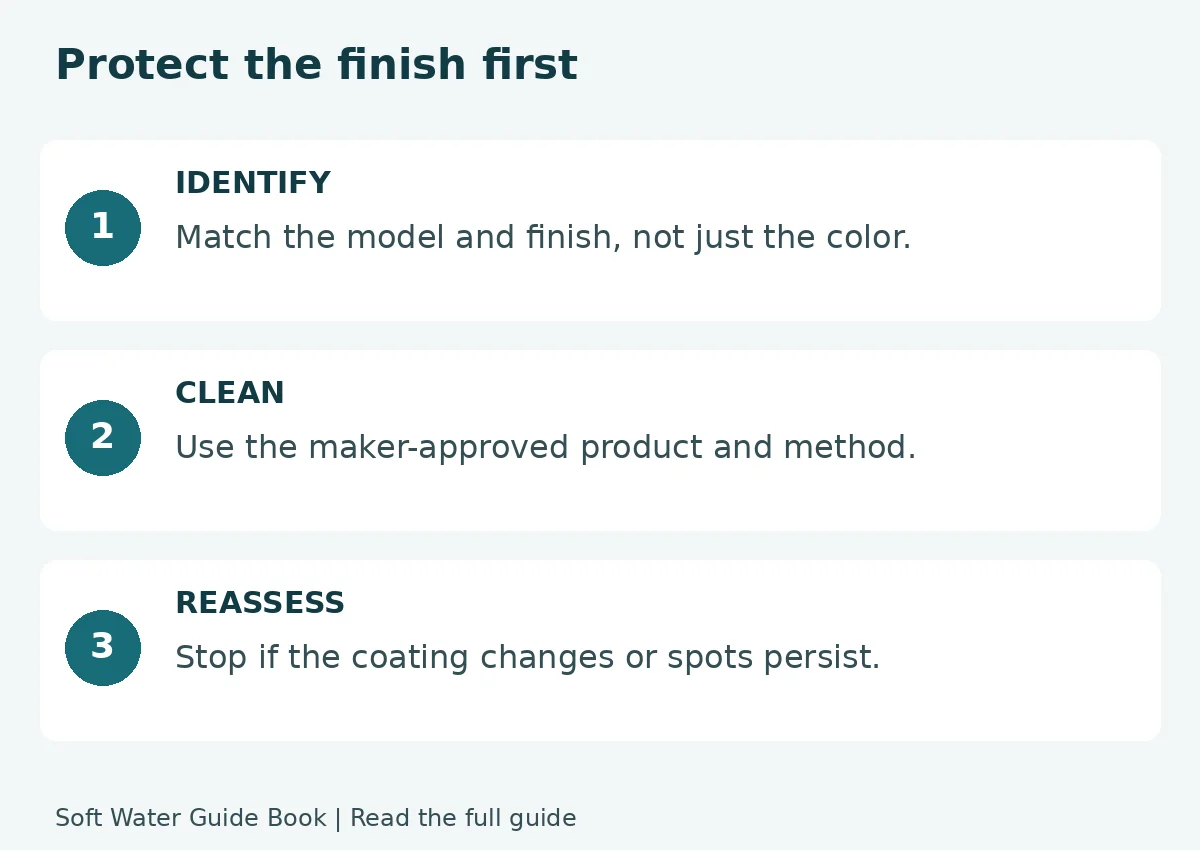
Before treating hard water stains on a faucet
Look for the model number or purchase paperwork and note the finish name. Photograph the marks while the faucet is dry. Check whether they appear around the spout, handle, base, or nearby sink. A new drip at the same spot may need attention separately from the existing stain.
| What you notice | What to check | Next step |
|---|---|---|
| Pale spots on an intact finish | Approved routine cleaning method | Clean gently, rinse, and dry |
| Crust around the base or handle | Finish-compatible mineral removal | Do not pry at the deposit |
| White marks on matte black | Exact coating and care instructions | Avoid a generic all-metal cleaner |
| Peeling, pitting, or a color change | Possible finish damage | Stop and ask the manufacturer |
| Uneven stream from the spout | Aerator or outlet care instructions | Treat flow inspection as a separate job |
How to clean hard water spots on faucets
1. Begin with finish-specific routine care
Use the cloth and mild cleaner recommended for your finish, then rinse and dry as directed. Match the finish name in the care guide rather than choosing a cleaner by the faucet’s color alone.
2. Check whether a mineral treatment is permitted
Kohler describes a 50/50 white-vinegar-and-warm-water solution for mineral buildup on faucets in its support guide. That is a source for the equipment it covers, not permission to apply acid to any black, brass-colored, painted, or coated fixture. Verify your own finish instructions first. [2]
If permitted, use the stated application method and contact time. Keep cleaner away from nearby materials that are not approved for it. Avoid wrapping the entire fixture in a soaked cloth and walking away unless the model instructions specifically allow that treatment.
3. Rinse and dry promptly
Remove cleaner as the care guide directs and use a clean, soft cloth to dry the surface. Compare the same area under similar lighting. If the deposit reduces, continue only within the instructions. A remaining discoloration is not automatically a reason to rub harder.
4. Stop if the finish changes
Pause if you see dulling, peeling, pitting, or a new color change. Photograph it and contact support with the model, finish name, product, and time of exposure. A worn or damaged coating is not a mineral stain that another soak necessarily removes.
Hard water stains on black faucets
Moen’s powder-coat group includes Matte Black. For routine care it specifies a damp cloth and mild dish soap, then a water rinse and soft-cloth drying. Its water-spot section also permits equal parts household vinegar and water for a limited time, followed by rinsing and drying. It does not provide a fixed soak duration. [1]
That is more specific than “never use vinegar on black”: identify the coating first. Do not transfer the permission to another brand or override a model-specific restriction. Avoid abrasive sponges, steel wool, solvent cleaners and harsh scale removers on the powder-coat group.
If the coating is unidentified, use only confirmed routine care and ask the maker about stubborn deposits. A sink cleaner is not automatically suitable for the faucet beside it.
What if the faucet also has an uneven stream?
Exterior spots and an outlet restriction are separate observations. Delta’s flow guide discusses debris in aerators or filters as a possible cause of uneven delivery. Locate the instructions for your outlet design before removing a screen or insert. [3]
Compare another tap and record whether only one outlet is affected. If a component is stuck, the finish is damaged, or a leak appears, ask for help rather than forcing the assembly with pliers. Keep removed parts only in the order described by the manual.
Reduce repeat spots and check the water
Follow routine cleaning with the permitted drying method. Note any persistent dripping or pooling and have it addressed if necessary. Keep a short record of when deposits return; that is more useful than switching cleaners every week.
To investigate the water itself, use a total-hardness test. If the tap is supposed to receive softened water, review the maintenance checklist and verify the bypass position. A visible mark is not a substitute for testing the treated supply.
For an uneven shower spray, use the shower-head cleaning guide. For a cloudy enclosure, use the separate shower-door guide; faucet-finish permissions do not apply to coated glass.
Editorial review November 7, 2026: consolidated repeated manufacturer guidance at the relevant cleaning step; retained material-specific limits.
Sources and care instructions
Sources reviewed September 30, 2026. Use the instructions for your exact product, material, and equipment.
- Moen: Faucet finish care and cleaning
- Kohler: Mineral buildup on faucets
- Delta: How to fix your flow
Manufacturer examples and task links checked October 16, 2026. The comparison is editorial guidance, not a report of hands-on cleaning tests.