
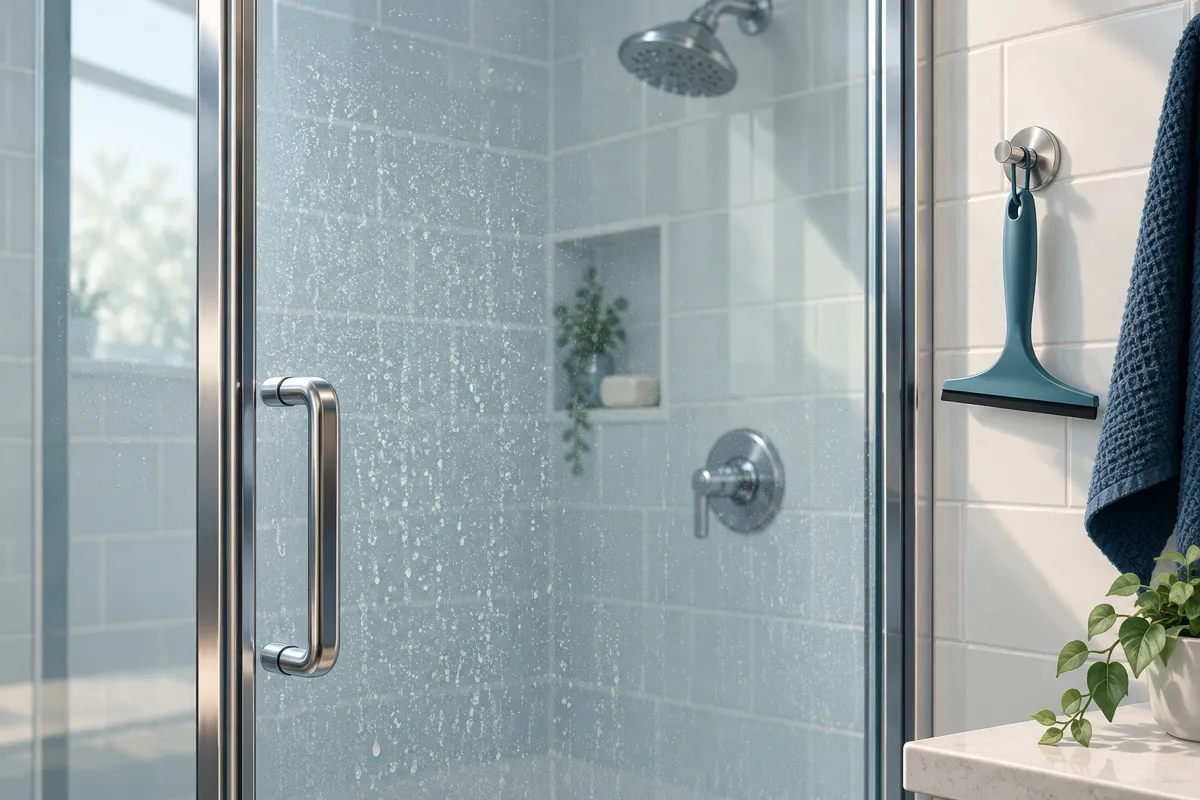
To remove hard water stains from glass shower doors, choose a cleaning method that is compatible with both the glass and any protective coating. Also account for the frame, seals, and nearby tile or stone. Follow the door manufacturer’s method, rinse as directed, and inspect the glass dry before repeating treatment.
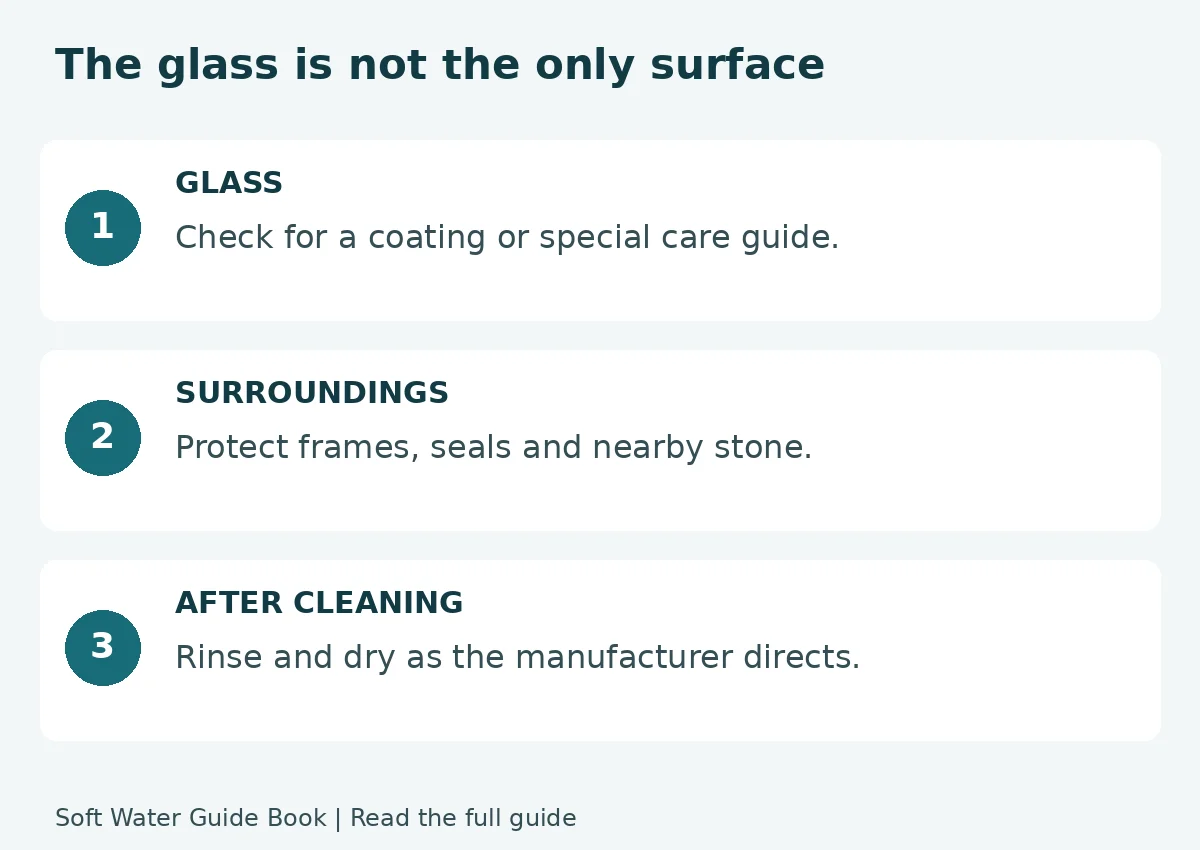
A shower enclosure contains several materials. A cleaner that removes a mineral deposit from one glass panel may still damage its metal trim or an adjacent surface. That is why the model’s care guide comes before a generic vinegar recipe.
What removes hard water stains from glass shower doors?
The answer depends on the surface treatment and the cleaner’s allowed use. For example, Sterling advises soft-cloth care for its CleanCoat-treated doors and warns against abrasives. Its metal-surface restrictions are stricter than a generic “glass cleaner” label might suggest. [1]
| Part | Question to answer | Practical next step |
|---|---|---|
| Glass panel | Does it have a coating? | Find the model-specific care guide |
| Frame and handle | What finish is present? | Check cleaner restrictions for that finish |
| Nearby tile or stone | Could runoff contact it? | Use only a method compatible with all exposed surfaces |
| Seals and tracks | Does the product permit contact? | Follow application and rinsing directions |
If you do not know the brand, look for markings or installation paperwork. Ask the installer before using a deposit remover on an unidentified coating. A small hidden-area test does not override an explicit manufacturer prohibition.
A step-by-step cleaning plan
1. Identify the pattern
Photograph a small representative area when dry. Note whether the marks follow droplets, cover the whole panel, or appear near soap products. Record what has already been used on it. That history helps avoid repeatedly treating damage as a fresh deposit.
2. Start with the recommended routine clean
Use the manufacturer’s specified cloth and cleaner. Work in a manageable area rather than coating the entire enclosure before reading the instructions. Follow the method for application, wiping, and rinsing. Do not let a product dry on the panel unless its directions explicitly allow it.
3. Escalate only to an approved mineral treatment
If routine care leaves deposits, ask which mineral-removal product is compatible with the panel and coating. Follow the stated dilution and contact time. Avoid steel wool, blades, drill brushes, or abrasive powders unless the exact surface instructions authorize them.
Sterling specifically cautions against abrasive tools, harsh cleaners, and allowing cleaners to soak on the surfaces it covers. Its guide is a useful example of why an overnight soak should not be a default recommendation for a shower enclosure. [1]
4. Rinse, dry, and compare
Remove the cleaner as directed and dry using the permitted method. Compare the same patch with the original observation. If it improves, continue the approved process. If the haze stays the same, seek advice about coating condition or glass damage rather than increasing abrasiveness.
When to stop trying stronger cleaners
Cloudiness can involve a surface change rather than material sitting on top. A glass-restoration supplier distinguishes hard-water deposits from etching that alters the glass and requires a different restoration process. Do not attempt machine polishing based on a general cleaning article. [2]
Stop if the panel becomes scratched, the coating changes appearance, or a frame finish discolors. Contact the door maker or a glass professional with photos, product names, and exposure times. Continuing the same treatment can obscure what happened.
Keep new spots from building up
Sterling recommends removing water with a squeegee or drying the doors after use to reduce spots and deposits. Its care guide also recommends allowing air circulation in the enclosure. Follow those measures in the way appropriate for your installation. [1]
If deposits recur quickly, measure the water hardness and keep the result with the cleaning record. Do not diagnose hardness solely from the appearance of a coated panel.
For a home already using a softener, check whether the shower is supplied by the treated line. Review routine softener care and the bypass position if the water result differs from what you expect. A softener does not restore glass that is already damaged.
A usable routine for Sterling CleanCoat doors
- After showering, remove water with a squeegee or dry the door.
- For CleanCoat glass, use a soft cloth and water for regular care.
- For occasional cleaning, follow Sterling’s mild-detergent-and-water guidance; rinse and wipe afterward.
- Keep cleaner from soaking on surfaces. Do not use abrasives on the glass; the metal restrictions also exclude acids, bleach, ammonia, alcohol and solvents.
This is a source-specific example, not an acid-descaling recipe for every coated enclosure. If this routine leaves a deposit, ask Sterling for the product appropriate to your model rather than applying a faucet soak to the frame. [1]
Cleaning a spray outlet is a separate job: see shower-head buildup. For metal hardware, compare finish-specific faucet care.
How another coated-door maker’s advice compares
DreamLine’s care article also recommends removing droplets after showering and using a soft cloth with mild soap for its doors. Its ClearMax coating reduces maintenance; it does not eliminate it. That agrees with Sterling’s emphasis on gentle routine care, but it does not make the two coatings’ approved products interchangeable.
For an unidentified enclosure, the useful next step is to identify the door and finish, then obtain the matching mineral-removal instructions. A persistent mark after an approved clean is a reason to send the maker the dry-panel photo, cleaner name and contact time—not evidence that a stronger acid or abrasive is appropriate.
Sources and care instructions
Sources reviewed September 30, 2026. Use the instructions for your exact product, material, and equipment.
Manufacturer examples and task links checked October 16, 2026. The comparison is editorial guidance, not a report of hands-on cleaning tests.
Editorial review November 7, 2026: clarified the limits of transferring care advice between coated doors. Documentation-based guidance; no hands-on test is claimed.