
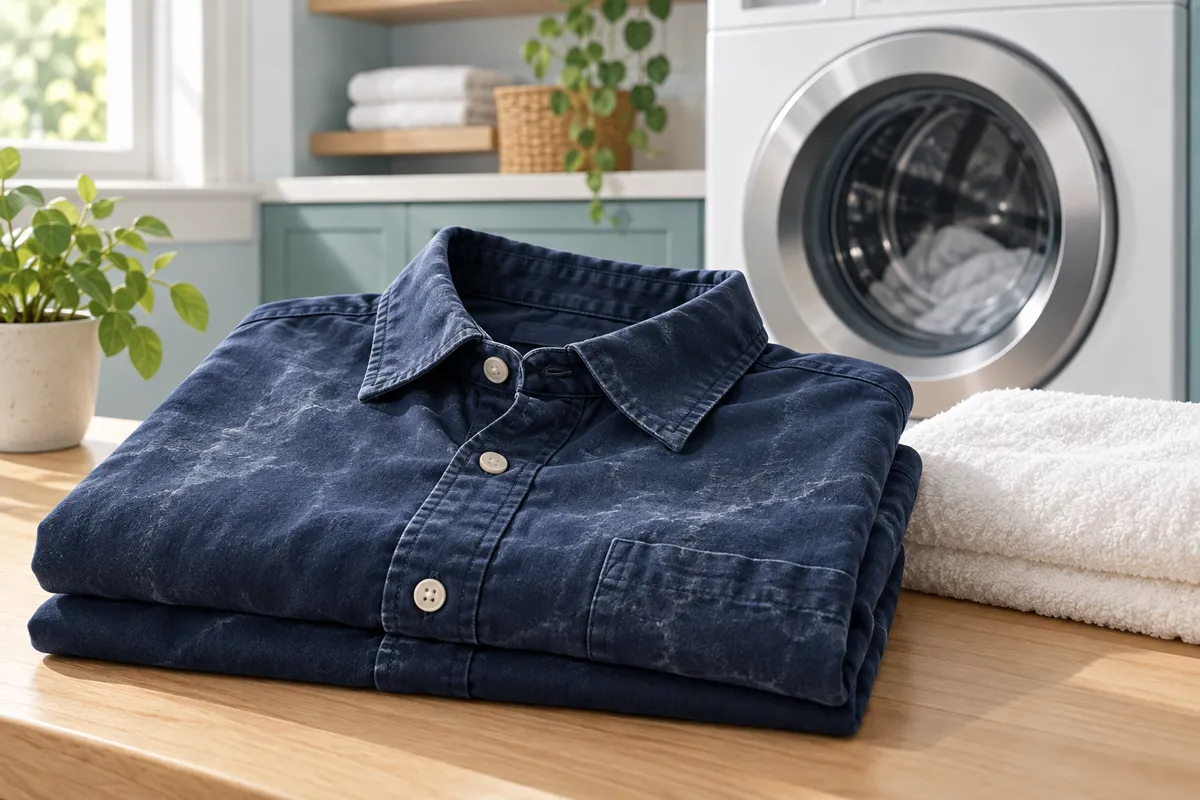
Hard water stains on clothes can appear as pale residue or an overall dull look, but not every mark left after washing comes from hard water. Start by identifying the residue, checking the fabric label, and reviewing the detergent and additives you used. Then treat the affected item with a method approved for that fabric.
The useful question is whether you are removing a deposit, treating a different stain, or looking at permanent color loss. Those problems need different responses. This guide helps you choose the next check without turning every wash into a trial of new products.
To choose a product for future loads, see our laundry detergent guide for hard water, with format comparisons and a simple dosing record.
What do hard water stains on clothes look like?
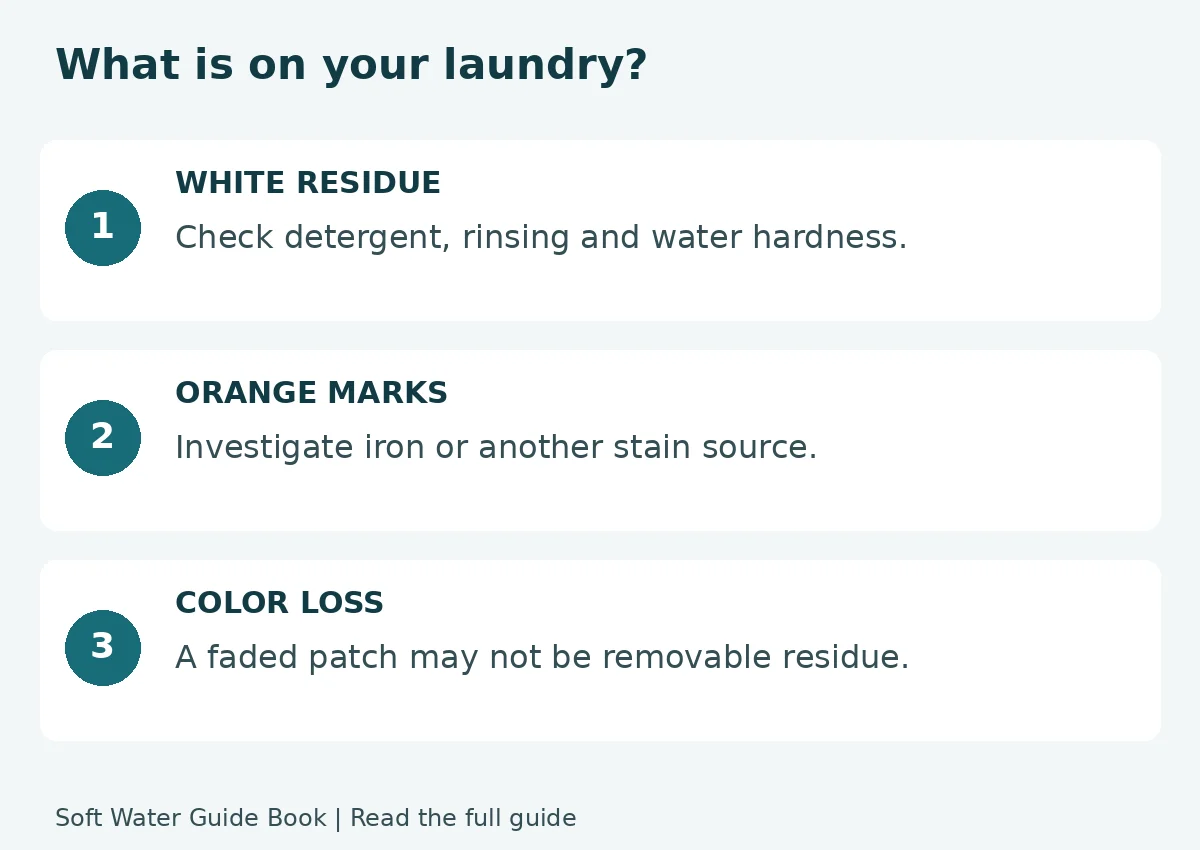
Samsung distinguishes gray or white deposits associated with calcium or laundry additives from orange or red marks that may involve iron, manganese, or plumbing. It also identifies oily fabric-softener marks and permanent bleach-related color loss as separate problems. Appearance is a clue, not a water test. [1]
| Observation | What to investigate | First check |
|---|---|---|
| White or gray streaks | Mineral-related residue or poorly rinsed laundry products | Record detergent amount and test hardness |
| Yellow, orange, or red marks | A separate staining source, including iron | Check whether incoming water is discolored |
| Oily-looking patches | Fabric-softener placement or dosing | Check the dispenser and product instructions |
| A lighter patch with no residue | Possible loss of fabric color | Do not assume a descaler will restore it |
If several loads show the same problem, compare a garment from each load and note when it appeared. A single stained sleeve and a whole load of stiff towels are different patterns. Take a photo before treatment so you can judge whether the mark actually improves.
How to get hard water stains out of clothes
1. Confirm that the item can be washed
Read the care label before soaking. Separate washable everyday fabrics from dry-clean-only, delicate, embellished, or unfamiliar items. For a valuable garment, ask the garment maker or a professional cleaner before experimenting. Use the temperature permitted for that fabric.
2. Check the wash process before adding a treatment
Write down the detergent, dose, load size, cycle, and additives. Correct an overloaded drum or a dosing error before the next wash. An additive left in the wrong compartment is not fixed by installing a water softener. Samsung recommends staying within both the product dose and dispenser limits. [1]
3. Use a fabric-compatible residue treatment
For the specific residue that can form when some powder detergents interact with hard-water minerals, the American Cleaning Institute describes soaking in a plastic container with 1 cup of white vinegar per 1 gallon of warm water, then rinsing. Treat this as a targeted option for compatible washable items, not a remedy for all stains. The same guidance suggests liquid detergent or a suitable nonprecipitating laundry water softener to help prevent that residue. [2]
Do not use that soak on an item whose instructions prohibit it, and do not pour a household-surface descaler onto clothing. Keep vinegar away from chlorine bleach: the combination releases irritating chlorine gas. Use one compatible treatment at a time and rinse as directed. [3]
4. Inspect the result and change one thing at a time
Rinse and inspect the item before committing the entire load to the same treatment. If it improves, repeat your normal wash according to the garment and detergent directions. If it does not, reconsider the diagnosis instead of increasing strength or soak time indefinitely. Keep a short note of what you changed.
Prevent residue in the next load
Use the detergent label’s instructions for your water and washer, including HE compatibility where required. Leave enough room for the load to move and keep the dispenser clean according to the washer manual. Do not assume that doubling detergent is the answer.
A total-hardness test helps you establish whether hard water is part of the problem. Record the sampling point: an outdoor tap may not receive the same treated water as the laundry. If you own a softener, confirm that the washer supply is on the treated line before interpreting the result.
If that supply is unexpectedly hard, follow the softener maintenance checklist and verify the bypass valve position using the model’s markings. Increasing a control setting or adding laundry chemicals cannot establish why treatment stopped.
Fabric softener is not water softening
A fabric-care additive and a household water-treatment system have different jobs. Do not pour dishwasher salt or a household-surface descaler into the washer to imitate a water softener. Match the garment, detergent and washer instructions.
If dishes also have a white coating, compare the glassware film check and dishwasher buildup guide. Several affected tasks justify checking the water supply, but they do not prove that every mark has the same cause.
Sources and care instructions
Sources reviewed September 30, 2026. Use the instructions for your exact product, material, and equipment.
- Samsung: Laundry stains and damage
- American Cleaning Institute: Laundering problems and solutions
- Poison Control: Vinegar and chlorine bleach
Manufacturer examples and task links checked October 16, 2026. The comparison is editorial guidance, not a report of hands-on cleaning tests.