
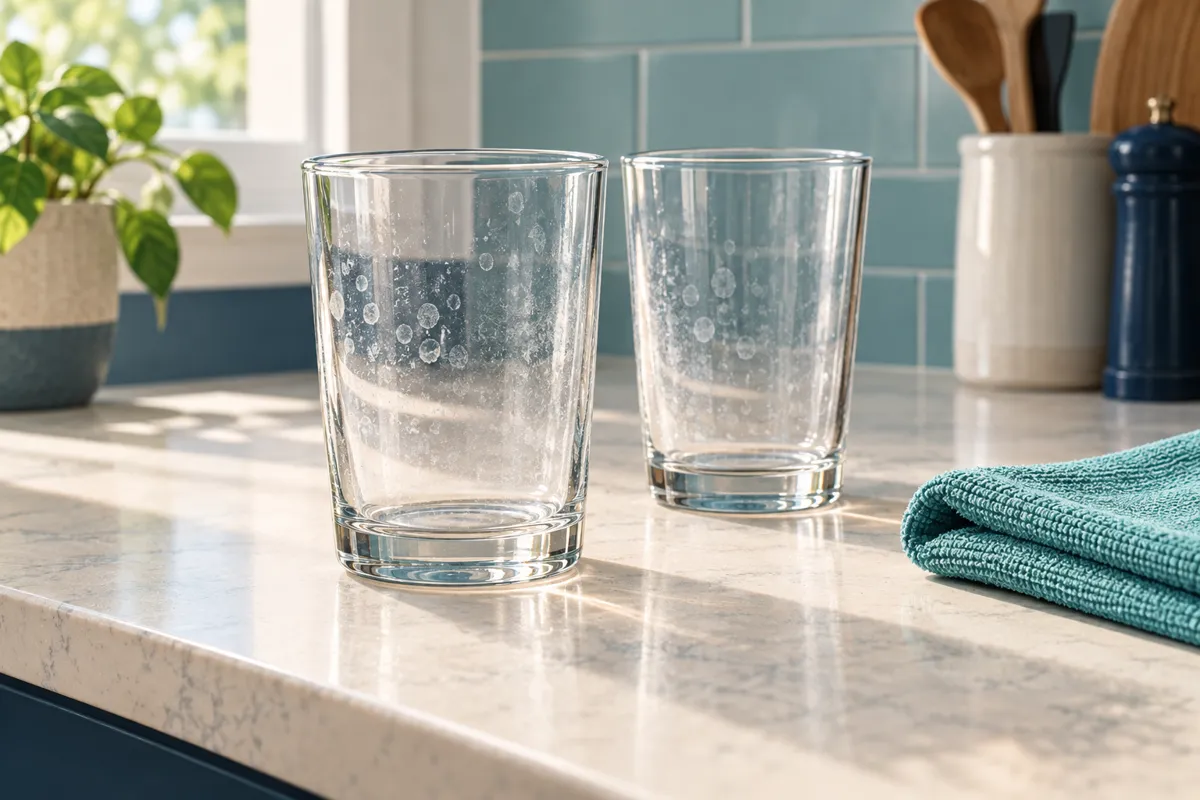
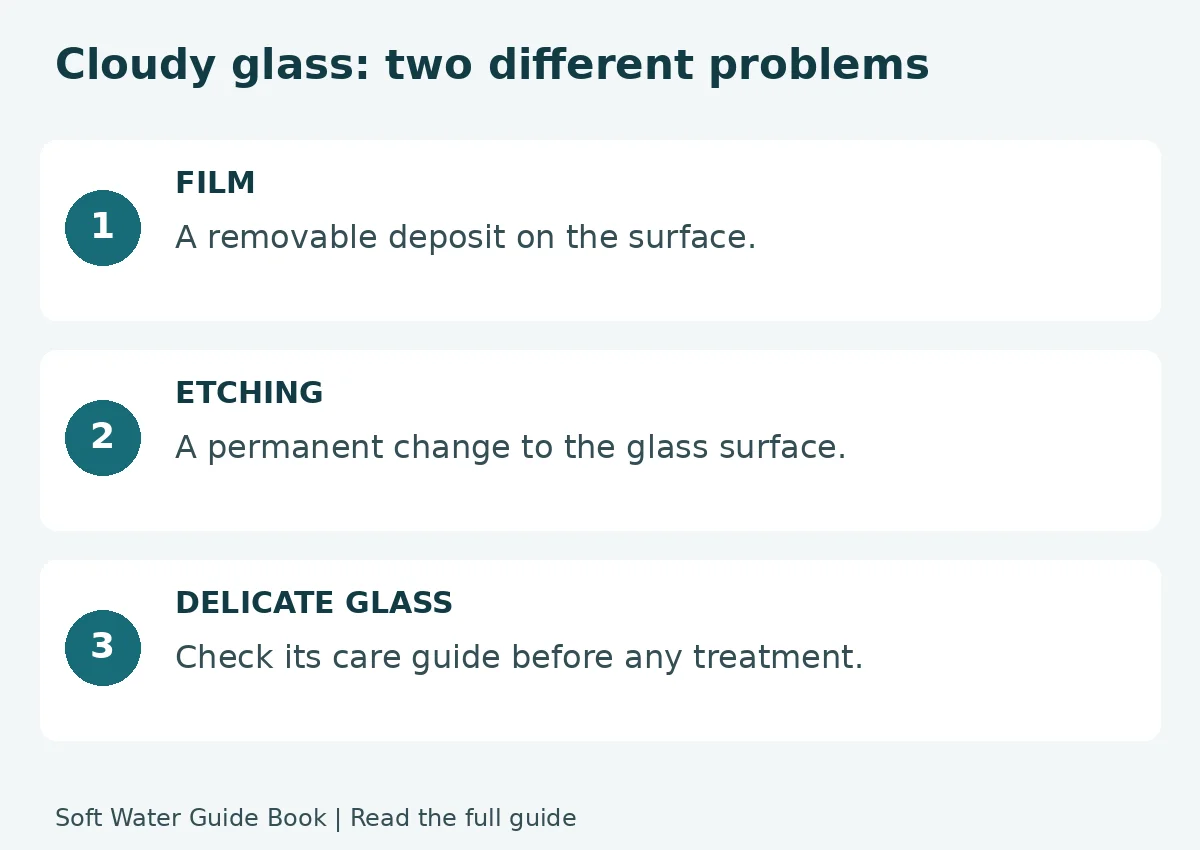
To remove hard water stains from glassware, first check whether the cloudiness is a removable mineral film or permanent etching. Use a cleaning method approved for that glass, rinse thoroughly, and inspect it dry. If the surface is etched, repeated descaling will not restore its original clarity.
This guide is for drinking glasses and washable glassware. Decorative coatings, painted rims, crystal, and other specialty items need their own care instructions. Do not use a shower-glass or toilet descaler simply because both jobs involve white marks.
How to remove hard water stains from glassware without guessing
Choose one ordinary, undamaged glass as a test item. Look at it in good light before cleaning and take a photo. Is the mark a set of water spots, a coating, a rainbow-like haze, or a scratch? The pattern helps you ask the right question, but appearance alone is not conclusive.
| Observation | What it may mean | Next step |
|---|---|---|
| Water spots or a cloudy coating | Removable film | Try the glass maker’s approved treatment |
| Haze remains after compatible cleaning | Possible etching or another surface problem | Ask the glass maker; stop escalating abrasives |
| Painted rim or applied decoration | A separate material with its own limits | Read the item-specific care instructions |
| Chip or crack | Physical damage | Stop using the damaged drinking glass |
GE distinguishes the mineral film often seen in hard-water areas from etching. Its separate guidance describes etching as permanent cloudiness that can occur with excessive detergent in soft water. That is why “more cleaner” is not always the next step. [1] [2]
Clean one glass before treating the whole set
1. Read the glassware care instructions
Check whether the item is dishwasher-safe and whether the manufacturer allows a vinegar treatment or another mineral-film remover. If you cannot identify a valuable or decorated item, use its normal gentle washing method and seek advice before soaking it.
2. Use the approved method
For filming, Libbey describes a vinegar soak, gentle removal with a nylon or plastic scrubber, a hot-water rinse and lint-free drying. Its article does not specify a dilution or number of minutes. Do not turn that omission into an overnight recipe, and follow item-specific limits for decorated or specialty glass. [3]
Keep any glass treatment separate from bleach or other cleaning chemicals. Use a clean container, not one that still contains another product. Do not borrow a stronger cleaner from a different household task.
3. Rinse and inspect dry
Rinse using the care instructions and dry with a clean, soft cloth. Compare the same area under similar lighting. A wet surface can make it harder to compare your before-and-after observations, so make the final comparison with the glass dry.
4. Decide whether to continue
If the coating clears, apply the compatible method to other suitable pieces. If the haze remains unchanged, do not keep increasing concentration, heat, or rubbing pressure. Record the treatment used and ask the glassware manufacturer whether the surface may be damaged.
Prevent the next layer of film
Keep three notes from the next dishwasher load: detergent dose, rinse-aid setting, and whether the water is softened. Match the dose to the package and machine instructions. The American Cleaning Institute explains that hardness affects detergent needs and recommends following both sets of directions. [4]
If you do not know the water conditions, measure total hardness at the relevant supply. A white mark cannot tell you the correct setting to enter in a treatment device.
For a household softener, verify the incoming-hardness programming and keep the routine maintenance record current. Do not increase the number simply to chase clearer glasses: first establish whether the issue is new film or old damage.
When reviewing the next wash, use our guide to choosing dishwasher detergent for hard water alongside the package and machine instructions.
Keep a short comparison record
- Identify one glass and photograph it dry.
- Write down the approved cleaning method and result.
- Record the dishwasher detergent and water test, with units.
- Compare a later load before changing another setting.
This record separates the result of cleaning an existing deposit from preventing a new one. If the test glass becomes clear but spots return after the next cycle, focus on washing and water conditions rather than repeating the same restoration step indefinitely.
For deposits on the machine itself, follow dishwasher descaling. If the marks are on an enclosure rather than drinking glasses, use the shower-door guide.
Editorial review November 7, 2026: consolidated repeated manufacturer guidance at the relevant cleaning step; retained material-specific limits.
Sources and care instructions
Sources reviewed September 30, 2026. Use the instructions for your exact product, material, and equipment.
- GE: White film on glassware
- GE: Preventing milky discoloration
- Libbey: Restoring shine to cloudy or etched glassware
- American Cleaning Institute: Hard-water residue
- Libbey: Etching of glassware
Manufacturer examples and task links checked October 16, 2026. The comparison is editorial guidance, not a report of hands-on cleaning tests.