
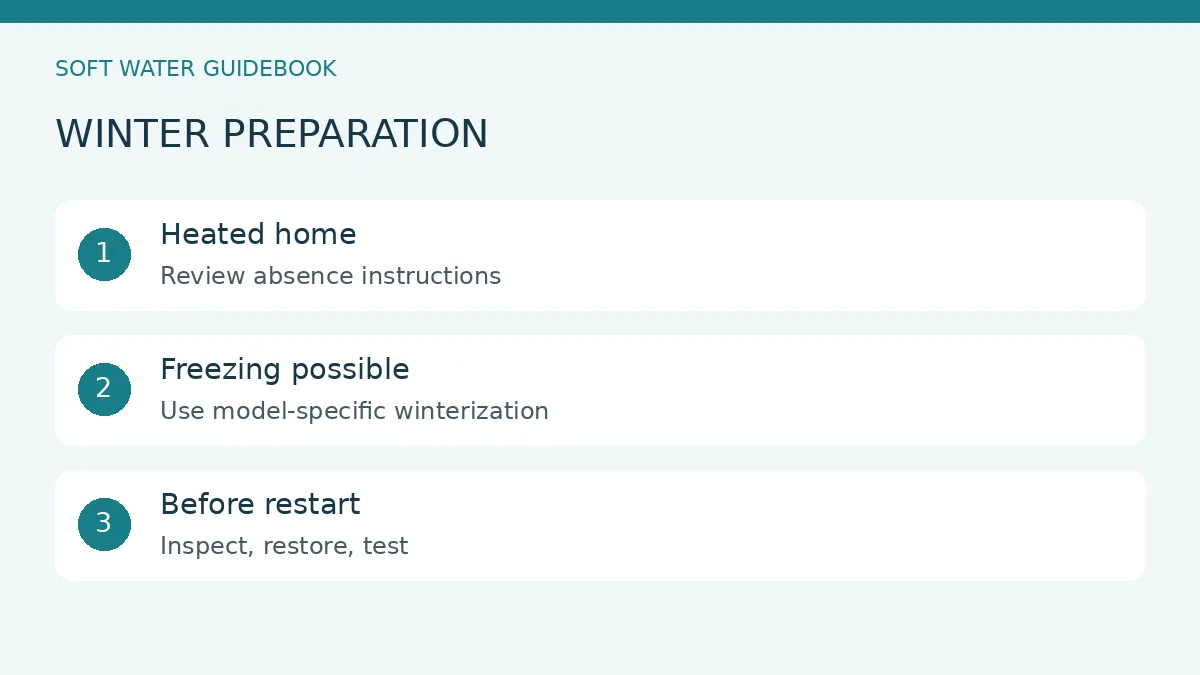
To winterize a water softener, use the shutdown and drainage procedure for your exact model before the equipment can freeze. Bypass alone does not remove trapped water. A seasonal cabin that will lose heat needs a different plan from an occupied home with a softener in a heated utility room.
This guide helps you choose the right preparation and organize the work. It does not replace the model-specific instructions for disconnecting or moving a pressurized, heavy appliance.
Does your water softener need winterizing?
Start with the temperature where the equipment and its connecting pipes actually sit. Kinetico identifies outdoor installations, unheated garages, and part-time residences as situations requiring attention before freezing weather. A heated house can also become vulnerable if its heating fails. [1]
| Situation | Next action |
|---|---|
| Occupied home; equipment stays within its rated temperature range | Continue normal care and review exposed plumbing with the installer. |
| Leaving temporarily; reliable heat remains on | Follow the vacation preparation guide and your manual. |
| Seasonal home; heat will be off or unreliable | Arrange the manufacturer’s winter shutdown and drainage procedure. |
| Possible freezing has already occurred | Do not treat this as routine winter preparation; arrange inspection before restart. |
How to winterize a water softener: plan before disconnecting it
1. Identify the complete installation
Record the softener model and valve type. Locate the water shutoff, bypass, electrical supply if fitted, drain connection, brine tubing, and any separate filters. Take clear photos of the connections and controller settings. The photographs are a record, not a substitute for an installation diagram.
Use our bypass valve guide to distinguish service and bypass positions. Do not assume every handle pushes in or turns in the same direction.
2. Obtain the correct shutdown instructions
Manufacturer approaches differ. GE publishes a procedure involving isolation, pressure relief, electrical disconnection, and drainage of the appliance and brine components. Its instructions also warn against supporting the appliance’s weight on its inlet and outlet fittings. Those directions should not be transferred automatically to another brand or tank design. [2]
Kinetico directs owners to their dealer for winterization advice and warns against unauthorized work that may affect warranty coverage. If your instructions require lifting a tank or disconnecting unfamiliar fittings, organize suitable help before starting. [1]
3. Plan the whole water system, not just the salt tank
Make a list of components that the shutdown must cover. Ask the installer to identify which remain water-filled after bypassing, which need draining, and how each will be recommissioned. Include adjacent filters and exposed lines in that discussion. An empty-looking brine tank does not establish that the rest of the system is protected.
4. Record the completed shutdown
Use the record below after the work is finished. Avoid a vague note such as “water off”: someone reopening the property needs to know exactly what was isolated, disconnected, or drained.
| Record | What to write down |
|---|---|
| Equipment and instructions | Model, manual section, installer contact |
| Water and power | Final valve positions and power status |
| Drainage | Components drained under the applicable procedure |
| Connections | Disconnected parts, protective covers, photos |
| Restart | Required inspection, flushing, sanitation, and recharge instructions |
Restarting after winter storage
Before restoring service, compare the installation with your shutdown record. Look for visible damage, displaced hoses, and missing parts. Follow the manufacturer’s reconnection and startup sequence; obtain service if the condition or assembly is uncertain. Check for leaks during startup and confirm the controller settings if applicable.
Once the specified startup process is complete, test untreated and treated water hardness to check performance. Keep the result with your maintenance record.
Common questions
Does bypass protect a softener from freezing?
No. Bypass changes the water route; it is not evidence that the appliance has been drained. Use the winterization procedure, not valve position alone, to establish readiness.
Should I copy a procedure that tips the tank on its side?
Only if that procedure applies to your exact equipment. GE’s published example includes specific handling precautions. Other manufacturers may require dealer service instead.
Is unplugging enough?
Unplugging and draining are separate tasks. Removing electrical power does not remove water from the equipment.
Sources
Reviewed November 6, 2026. Match instructions to your model.