
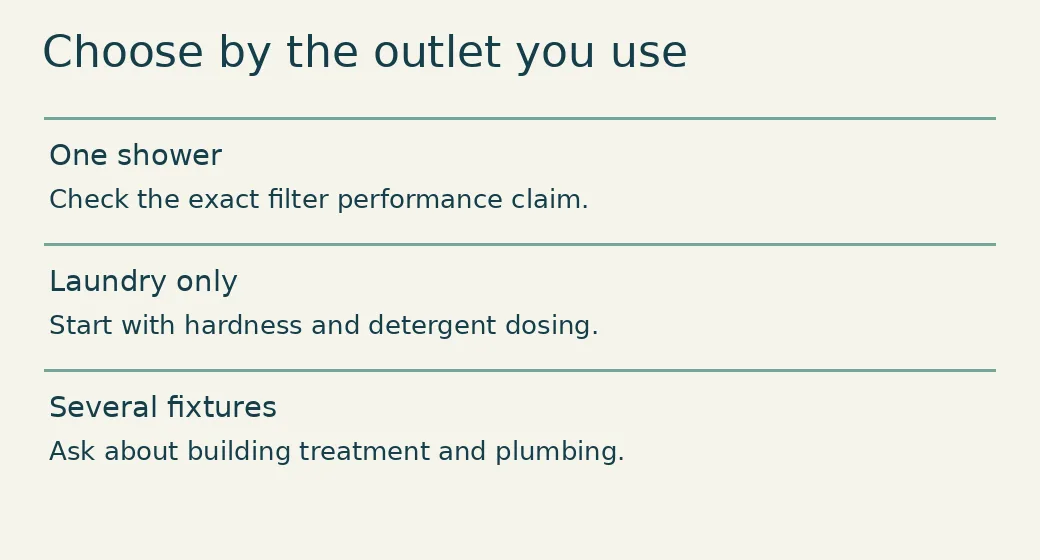
If you rent, start with two questions: Which outlets have the problem, and do you need to reduce hardness or just remove the deposits it leaves? A scaled showerhead, stiff laundry and a chlorine odor can lead you to the same shopping aisle, but the remedies differ. You can narrow the options before buying anything or asking your landlord to change the plumbing.
Check the water in your own unit
Ask management whether the building treats the cold supply, the hot supply, or both. Then test total hardness at the outlet you use, following the kit’s sampling temperature instructions. Record the result and units. A utility report is useful background, but building treatment can change what reaches your tap. Our home hardness testing guide explains where to sample and how to read the result.
| Your main problem | First step in a rental | What that step changes |
|---|---|---|
| Uneven spray and crust on a showerhead | Check the finish and use the fixture maker’s cleaning method. | Removes existing buildup; the incoming water keeps its original hardness. |
| Chlorine odor at the shower | Compare products with a verified free-chlorine reduction claim. | Targets that substance at one outlet. |
| Laundry residue | Check the detergent label, load size and washer instructions. | Lets you test a dosing change without modifying the plumbing. |
| Measured hardness at several fixtures | Ask where the unit’s supply can be accessed and whether a softener is permitted. | Establishes which fixtures a system could actually serve. |
Will a shower filter soften apartment water?
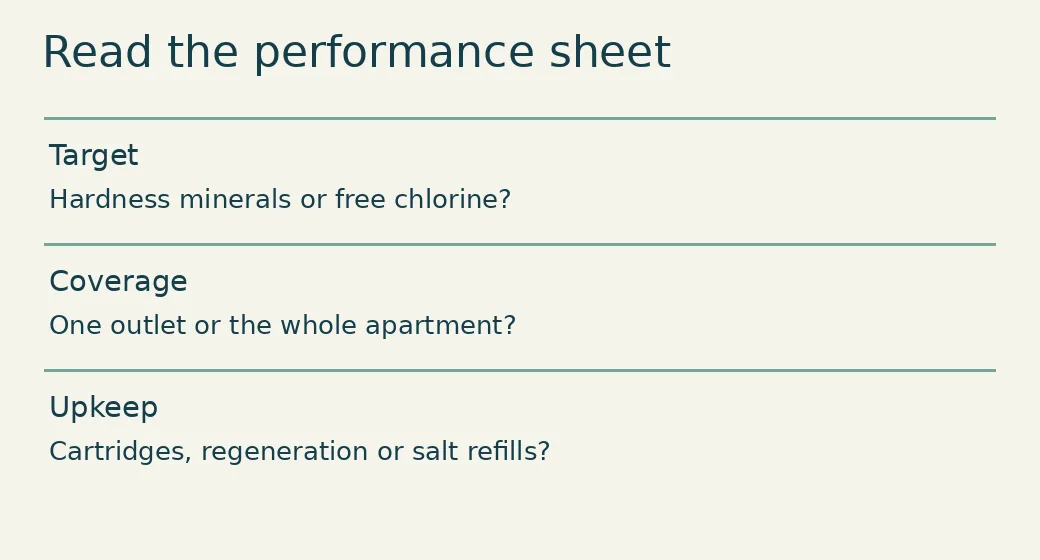
Read the performance claim for the exact model. NSF/ANSI 177 addresses shower filtration for reduction of free available chlorine. That claim does not establish removal of dissolved calcium and magnesium. If hardness reduction is your reason for buying, ask for hardness performance, treated volume and the maintenance or regeneration procedure. NSF identifies residential cation-exchange softeners under NSF/ANSI 44. See NSF’s guide to treatment standards.
For example, a renter with a restricted spray pattern may get the result they want by removing deposits from the showerhead. Buying a chlorine-reduction filter for that existing crust would leave the cleaning job untouched.
When a portable softener makes sense
Consider a portable ion-exchange unit if you have a compatible connection, need softened water at that outlet, and can carry out the unit’s regeneration and rinse procedure. Check allowed water temperature, pressure, service flow and where the discharge will go. A device approved for a cold-water hose connection may be unsuitable for a hot shower line. Ask the manufacturer about the exact setup before ordering adapters.
Capacity helps you judge the upkeep. At a measured 15 grains per US gallon, treating 20 gallons uses about 300 grains of hardness capacity. Divide the unit’s usable capacity at the intended salt dose by that load to estimate how many such uses it can serve before reserve. Compare the result with your routine and the manufacturer’s instructions. A small unit may be practical for one task even when it would require frequent regeneration for a whole apartment.
What to ask the property manager
Give management the hardness reading, the outlet tested and the change you want. Ask whether the apartment has its own accessible supply and shutoff, which connections serve other units, what modifications are permitted in writing, and who is responsible for installation and removal. Include the proposed discharge location for any regenerating system. If the building shares its hot water, a unit on your private cold line may leave hot fixtures unaffected.
If plumbing access rules out a whole-unit system, pick one measurable outcome. For laundry, compare similar loads following the hard-water detergent guide. For the shower, compare your before-and-after hardness readings only when the selected device claims to soften water. For a chlorine filter, judge it against its own stated claim.
For a portable humidifier, check the appliance’s water requirements separately. Our guide to choosing water for a humidifier explains the differences between appliance types and water options.