
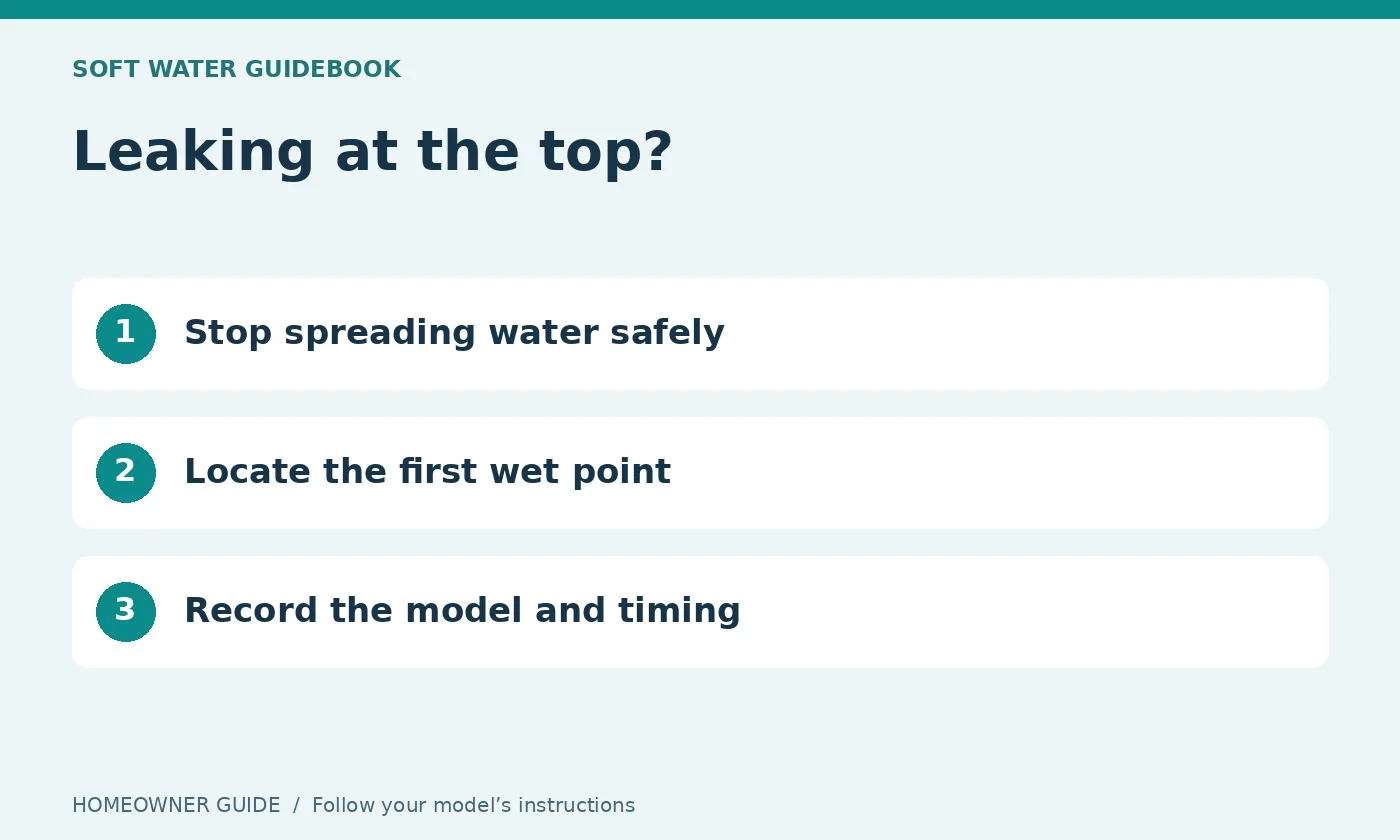
A water softener leaking at the top may have a leaking valve seal, bypass connection, or drain-hose fitting. Water can also travel down from nearby plumbing. Identify where fresh water first appears before ordering a part: a puddle at the base does not prove the tank itself is cracked.
Rheem’s troubleshooting separates valve-head leaks, bypass leaks, overflow, and leaks around the resin-tank connection. Each location leads to a different repair path. [1] This guide helps you collect the right observations without opening pressurized parts.
What to do first if your water softener is leaking at the top
If water is spreading, prioritize stopping the supply and protecting the area. Use the model’s bypass procedure only if the valve is accessible and you can operate it safely. If the leak continues, or the leaking connection is on the supply side, use the appropriate water shutoff and contact a plumber. Do not force a stuck handle.
Keep away from wet plugs, outlets, and electrical controls. Do not reach through standing water to unplug the unit. A professional should address electrical exposure before troubleshooting continues.
Turning off electrical power is not the same as shutting off the water supply. Similarly, putting a softener in bypass does not establish that every component has been depressurized. Do not loosen a fitting, pull a retaining clip, or remove the valve head while investigating.
Find the first wet point, not just the puddle
If the area is safe, photograph the installation and the visible wet spots. Inspect only accessible exterior surfaces. Remove a cosmetic cover only when your manual permits it and doing so will not expose you to wet wiring.
| First visible wet area | What it helps distinguish | Useful detail to record |
|---|---|---|
| Main valve housing | A valve-body or internal-seal leak | Where fresh drops form |
| Inlet, outlet, or bypass connection | A connection leak rather than tank overflow | Which joint is wet first |
| Drain-hose connection | A hose or adapter leak associated with discharge | Whether it happens during regeneration |
| Neck of the resin tank | A possible valve-to-tank sealing problem | Whether water starts above or below that joint |
| Brine-tank overflow outlet | Excess water in the salt tank | The salt-tank water level |
This is an observation guide, not a parts diagnosis. For its covered systems, Rheem links water at the valve housing to seal or valve repair and distinguishes drain-adapter leaks from distributor O-ring leaks. The correct assembly depends on the exact model. [2]
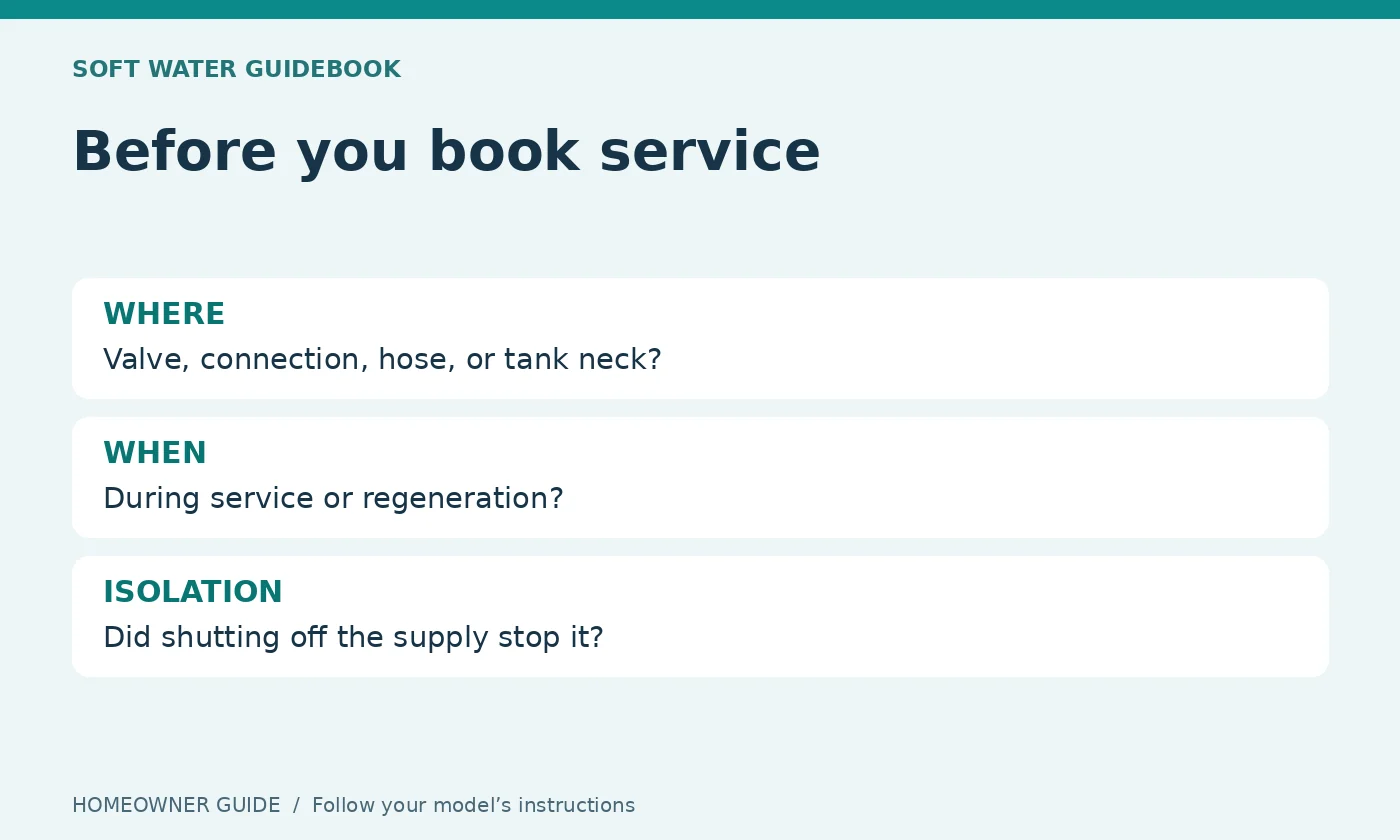
Does it leak only during regeneration?
Tell the technician whether you noticed the leak during normal service, overnight, or while the display showed a recharge. A short video of an already occurring leak can be helpful if you can record it safely.
Do not start repeated cycles just to reproduce a leak that could damage your home. Rheem’s valve-head procedure includes a controlled cycle inspection for specific models; that is not a universal instruction for every leaking unit. [2]
If you are unsure what the display means, see our guide to regeneration timing. A normal cycle duration does not make an external leak normal.
Overflow needs a different investigation
Water leaving the salt tank’s overflow outlet points to a high tank level in Rheem’s diagnostic guide. [1] Use the water-softener-full-of-water checklist for that symptom. Do not plug the overflow to stop the visible water.
Once the cause has been repaired, include the hose routes and accessible connections in your routine maintenance check. If accumulated residue needs cleaning, follow the brine-tank cleaning guide after the active leak is resolved.
Questions homeowners ask
Can I just tighten the leaking connection?
Not without identifying the connection and following the manufacturer’s procedure. A clipped adapter, threaded fitting, and O-ring seal do not have the same repair method. Tightening the wrong part can make the problem worse.
Does a top leak mean I need a new softener?
Not automatically. Manufacturer troubleshooting includes replaceable seals and adapters. Ask for the diagnosed failure, warranty coverage, and a repair quote before deciding on replacement.
What should I send when booking service?
Send the model and serial number, photos of the first wet point, when it leaks, and whether isolation stopped it. Mention any recent installation, plumbing work, or freezing exposure.
For help identifying the control, see the water softener bypass valve guide. Bypass does not replace the separate pressure-relief procedure required before repairs.
Sources and review notes
Reviewed September 28, 2026. This guide compares manufacturer guidance; it does not report hands-on testing. Your model’s manual controls service procedures.